Cambodia Multi-Entry: the Laos Tropaeng Kreal Loop for Australian Travellers
Chasing the Irrawaddy dolphins and the Si Phan Don river-island circuit on a Cambodia Business eVisa? This is the Tropaeng Kreal-Veun Kham loop for Aussies — slower than Bavet, much quieter, and the natural pairing with a wildlife or Mekong-river trip.
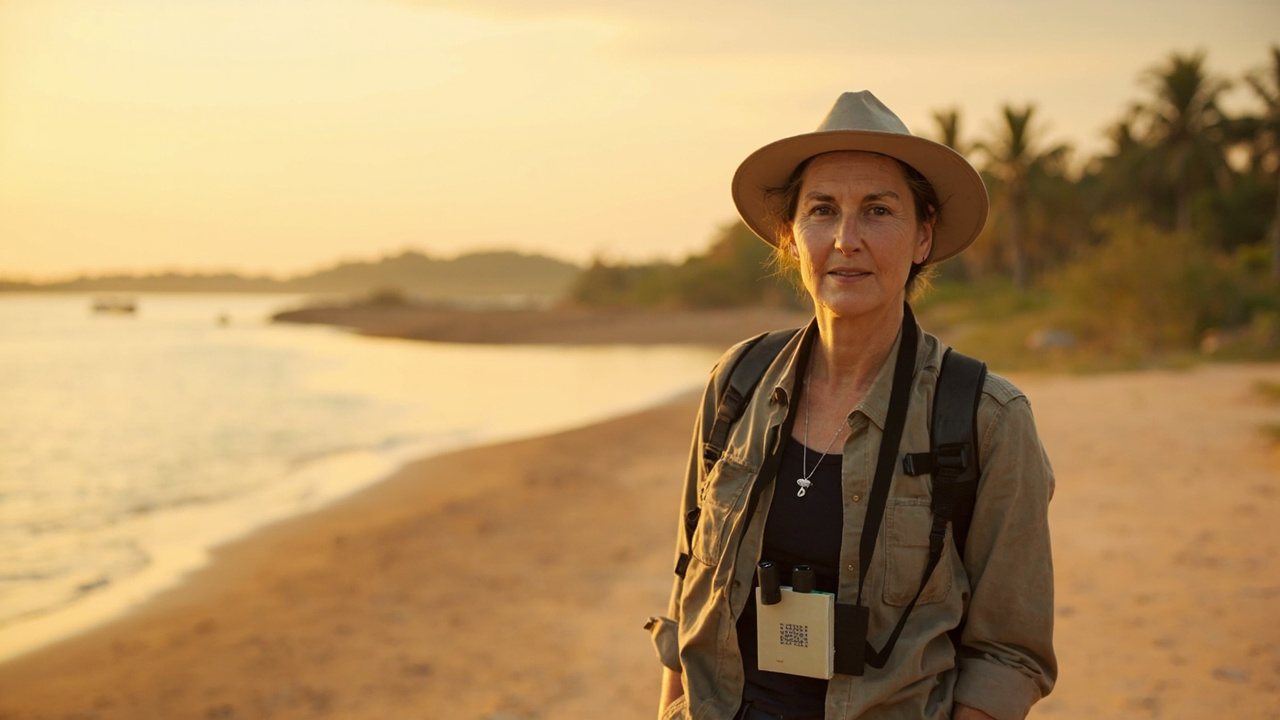
How does an Australian traveller run the Cambodia-Laos Tropaeng Kreal-Veun Kham loop on a multi-entry workflow?
Treat each Cambodia entry as a separate single-entry Business eVisa: $90 USD (~$137 AUD) all-in, approved in 3 business days, delivered as a printable PDF by email. Pair it with Laos visa-on-arrival ($35 USD (~$53 AUD) for Aussies in cash) at Veun Kham, since Laos still issues VoA reliably to Australian passport holders. The slow rhythm is fly into Phnom Penh KTI, head north via Kratie and Stung Treng for the Mekong dolphin and dry-forest segments, cross at Tropaeng Kreal-Veun Kham for the Si Phan Don river-island and southern Laos circuit, then file a fresh Cambodia application from Pakse and re-enter overland three or four days later. The crossing itself is slower and quieter than Bavet — perfect for an Aussie wildlife or Mekong trip combo.
Key Takeaways
- Cambodia eVisas are single-entry in 2026. An Aussie running the Mekong loop needs a fresh Business eVisa for every re-entry from Laos — $90 USD (~$137 AUD) all-in, approved in 3 business days, delivered as a printable PDF by email.
- The Phnom Penh-Stung Treng-Tropaeng Kreal drive is a long day: roughly 9 hours from the capital or 1.5 hours from Stung Treng. Most Aussies break it at Kratie or Stung Treng overnight before the crossing.
- Laos visa-on-arrival is $35 USD (~$53 AUD) cash for Australian passport holders at Veun Kham. Carry it in clean small notes — the booth has no ATM and the money-changer rates are roughly 12% below market.
- Tropaeng Kreal is the quieter, more scenic crossing but VoA stockouts on the Cambodian side are routine. For your return entry, the pre-applied Cambodia Business eVisa is the safer call — apply from Pakse on a Lao SIM hotspot.
- Land entries do not need the e-Arrival Card — that is air-only. The Mekong wildlife loop typically doesn't involve another Cambodia air leg, but if you fly out to Bangkok or Singapore from KTI later, the verified e-Arrival is $5 USD (~$7.50 AUD).
Why the Laos loop fits the Aussie Mekong trip combo
If you have come to Cambodia for the Irrawaddy dolphins at Kampi, the dry forest at Mondulkiri, or the bird-rich wetlands of Stung Treng, you have already done most of the driving you need to do to reach Tropaeng Kreal. The crossing sits about 70 km north of Stung Treng township on Highway 7, on the Mekong's east bank, and it slides straight into the Si Phan Don river-island archipelago on the Laos side — Don Det, Don Khon, Don Khong — which is the natural extension of a Cambodian Mekong wildlife trip. For Aussie travellers running a slower, naturalist-style itinerary, this is the corridor that makes sense.
The catch is that the Cambodia eVisa is a single-entry document. Every time you re-enter Cambodia from Laos, you need a fresh approval filed from outside the country. The Tropaeng Kreal field guide has the booth-side detail, but the practical implication is that you are running two short Cambodia segments with a Laos segment in the middle, and each Cambodia segment needs its own approval. Aussies sometimes assume a $90 USD (~$137 AUD) Business eVisa covers re-entries the way it does in countries with multi-entry policies — Cambodia in 2026 does not work that way.
This is the field-tested playbook for the slower, quieter version of the Indochina loop. How the Tropaeng Kreal-Veun Kham crossing actually works at the booth, how the Laos visa-on-arrival pricing pans out for Aussies in 2026, how to time a return Cambodia application from a Pakse guesthouse with patchy wifi, and the practical things that go wrong if you treat this crossing like Bavet. I have personally walked through Tropaeng Kreal more than thirty times since 2019, mostly chasing dry-season birds and river dolphins, and the rhythm has stayed remarkably consistent through three rounds of regional border-policy shifts.
Tropaeng Kreal vs Bavet — why Aussies pick the slower corridor
Most Aussie travellers on the Indochina loop default to Bavet because the bus operators run it hourly and the Saigon-Phnom Penh corridor is well-documented. Tropaeng Kreal is the alternative, and for the right traveller it is the better one. The choice usually comes down to what you want to do on either side of the crossing — Saigon city for an HCMC consultant or family flight home, or Si Phan Don river-islands for an Aussie wildlife or slow-travel trip.
The slower pace is the point
For an Aussie on a wildlife-driven Mekong trip, the extra travel time to reach Tropaeng Kreal is not lost time — it is the trip. You stop at Kampi for the dolphins, you overnight in Kratie at one of the riverfront guesthouses, you stop in Stung Treng for the wetlands and the river crossing to Anlong Phnom. By the time you reach Tropaeng Kreal you have done four days of slow Mekong travel. The crossing itself takes 30 to 45 minutes per side and feels more like a quiet customs post than the busy Bavet bus-terminus experience. Our broader overland re-entry guide has the cross-corridor comparisons.
What you give up at Tropaeng Kreal
Three things. First, the passport-runner system that makes Bavet effortless does not exist here — most travellers cross independently in private vans or shared minivans booked through Stung Treng or Si Phan Don guesthouses. You queue your own passport at both booths. Second, the Cambodian VoA at Tropaeng Kreal is the least reliable in the country — sticker stockouts are routine and informal facilitation fees show up regularly. For a returning Aussie with a fresh pre-applied eVisa, this is largely irrelevant, but it is the reason we strongly recommend the pre-applied approval rather than improvising at the booth. Third, the corridor is genuinely remote — the nearest reliable ATM is in Stung Treng on the Cambodian side or Pakse on the Lao side, and the nearest hospital is hours away.
Pairing Cambodia single-entry with Laos visa-on-arrival
The visa stack for the Laos loop has two pieces and one important difference from the Vietnam version. On the Laos side, Australian passport holders are eligible for visa-on-arrival at Veun Kham — $35 USD (~$53 AUD) cash, issued at the booth in roughly fifteen minutes, valid for 30 days, single entry. Laos also offers a $50 USD (~$76 AUD) eVisa in advance but for a single Mekong-loop segment the VoA is faster and cheaper. On the Cambodian side, the same rolling single-entry Business eVisa pattern as the Bavet loop — file from outside Cambodia, $90 USD (~$137 AUD), three business days. The Cambodia eVisa multiple-entry rules cover the wider 2026 policy framing.
The cost maths for a typical two-week Mekong wildlife loop is straightforward. Two Cambodia Business eVisas at $90 USD (~$137 AUD) each is $180 USD (~$274 AUD). One Laos VoA at $35 USD (~$53 AUD) on the way in, no second Laos visa needed because you depart Laos overland for Cambodia rather than re-entering. Total visa stack for the loop: $215 USD (~$327 AUD). Add a Cambodia e-Arrival Card at $5 USD (~$7.50 AUD) for your initial Phnom Penh KTI air arrival and the round number is $220 USD (~$334 AUD).
Tourist or Business eVisa for the wildlife loop?
If your trip is genuinely tourism — wildlife, photography, river-islands, no paid work, no meetings, no conference attendance — the Tourist eVisa at $80 USD (~$122 AUD) is the right choice. Business at $90 USD (~$137 AUD) is for engagements involving paid work, supplier visits, sales calls, due-diligence, sponsored events, or longer working stays. Most Aussie Mekong wildlife trips fit cleanly under Tourist, which makes the per-loop visa stack closer to $200 USD (~$305 AUD) all-in.
Why the difference matters: Tourist auto-extension ended in November 2025. If your trip plan is longer than 30 days on a single Cambodia segment, you cannot extend a Tourist eVisa in-country anymore. The clean workarounds are either a fresh Tourist eVisa after exiting and re-entering (which is exactly the Laos loop), or a Business eVisa which can still be extended at Phnom Penh's GDI for $290-$340 USD (~$441-$517 AUD). For a typical Aussie wildlife loop with 10-14 days on the Cambodian side and 5-7 days on the Lao side, Tourist works fine. The Cambodia Business vs Tourist cost difference page has the deeper comparison.
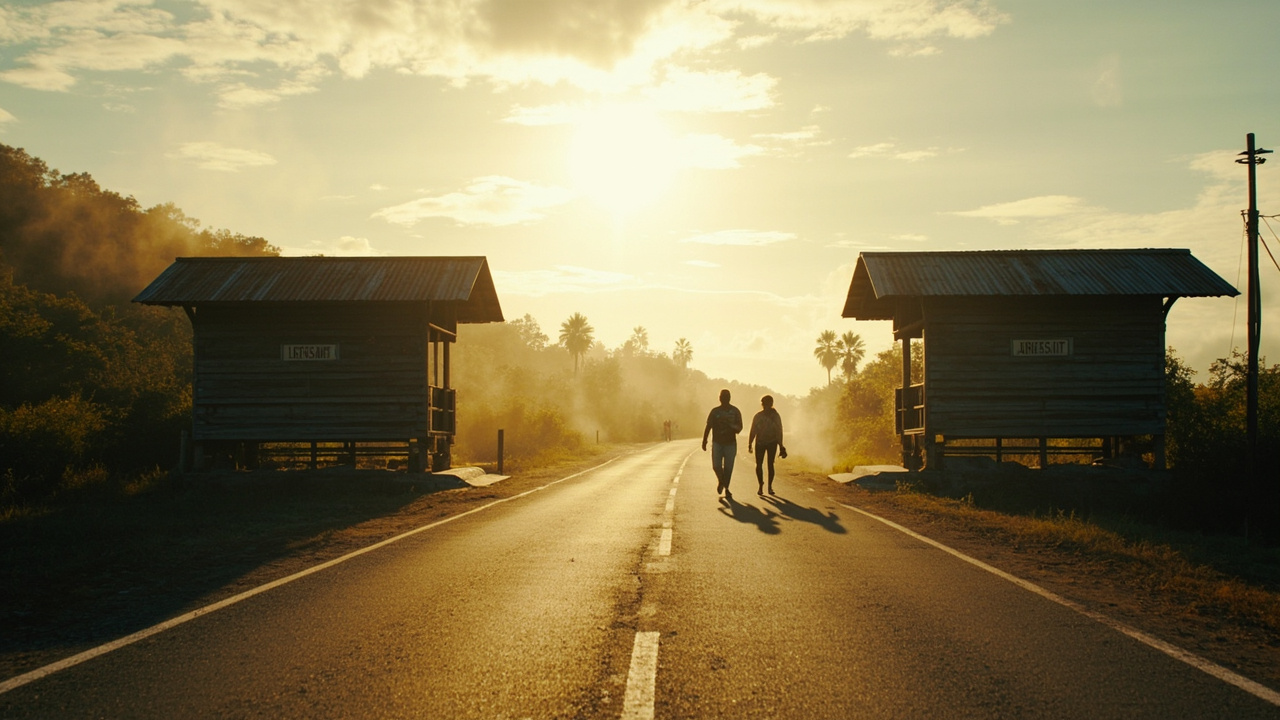
The Tropaeng Kreal-Veun Kham crossing day by day
Plan the crossing as a full half-day even though the booth time itself is short. Most Aussies on this corridor are coming up from Stung Treng township in a hired van or shared minibus, leaving around 7am, reaching the Cambodian exit booth at Tropaeng Kreal between 8:30am and 9am. The booth runs the standard exit process — passport, eVisa PDF, exit stamp — in 10 to 15 minutes. There is no e-gate, no fast lane, no formal queue management; you walk up and the officer takes your passport across the counter. The booth is open 7am to 6pm and the last reliable processing time is around 5pm.
Once stamped out on the Cambodian side, you cross roughly 800 metres of sealed road through the no-man's-land. There is no shuttle and no covered walkway — you carry your bag through the sunlight, which on a wet-season afternoon can be a soaking experience. On the Laos side at Veun Kham, the visa-on-arrival booth processes your application in roughly fifteen minutes. The fee is $35 USD (~$53 AUD) for Australian passports, paid in cash. The officer will sometimes try to add a 'weekend fee' or 'after-hours fee' of $1 to $2 USD (~$1.50 to $3 AUD) if you are crossing outside peak hours — this is informal and travellers who politely push back usually have it dropped. Carry exact change.
From Veun Kham, the onward transport options are minibus to Si Phan Don (90 minutes, around $5 USD (~$7.50 AUD)), minibus to Pakse (2.5 hours, around $12 USD (~$18 AUD)), or pre-booked private car to either. Most Aussies on the wildlife loop spend three or four nights in Si Phan Don for the Mekong river-islands, the Khone Phapheng waterfall, and the Irrawaddy dolphins from the Lao side near Don Khon. The Laos overland crossing details cover the broader Pakse-to-Vientiane onward routing if your trip extends north.
USD cash, clean small notes
Tropaeng Kreal and Veun Kham have no ATMs. The Lao VoA fee must be paid in cash — bring $40 USD (~$61 AUD) per person in clean small notes (no tears, no ink marks, no notes older than 2013) to cover the $35 VoA plus any informal small surcharge. The nearest reliable ATM is Stung Treng on the Cambodian side or Pakse on the Lao side, both at least 90 minutes away from the booth. Do not rely on the money-changers at the border; their rates are roughly 12% below market.

Applying for the return Cambodia eVisa from Pakse
Once you are on the Lao side and settled into Si Phan Don or Pakse, the return Cambodia application follows the same rules as the Vietnam version. The Cambodia eVisa must be applied for from outside Cambodia, your passport must not show an active Cambodian entry stamp, and the three-business-day clock starts from submission. The clean workflow is exit Cambodia at Tropaeng Kreal on day three or four of your trip, spend two or three days at Si Phan Don, then file the return application from a Pakse guesthouse on day six or seven for a re-entry on day nine or ten. The Australian application walkthrough takes you through the form field by field.
Wifi reality check: Si Phan Don wifi is rough. The river-island guesthouses run on solar or generator power, the connection is shared across the property, and the photo-upload step of the Cambodian portal occasionally fails on slow connections. The clean approach is to overnight in Pakse for one night specifically to file the application — the larger hotels along Pakse Riverside have fibre wifi suitable for the application. Mobile data on a Lao SIM is the backup; the Lao Telecom or Unitel local SIM at around 30,000 kip (about $2 USD (~$3 AUD)) gives you 5GB of 4G that handles the upload cleanly. Avoid trying to file from a Don Det bungalow on shared satellite wifi unless you have unlimited patience.
The seven-day rule of thumb applies here even more than at Bavet because the corridor itself is slower. File the return application at least seven days before your intended re-entry. Three business days is the headline turnaround, the approval lands as a printable PDF by email, and free resubmission if Immigration flags a correction is built into the all-in price. Aussie-timezone support means you can check status during your daytime hours back home or in Laos. Most returning Aussies on this loop apply on a Monday from Pakse and cross back on the following Tuesday or Wednesday, which absorbs any Cambodian public-holiday slowdowns. The Cambodia eVisa for Australians page has the full all-in fee breakdown.
The return crossing itself is structurally identical to the outbound. Veun Kham exit stamp on the Lao side, walk the 800m no-man's-land, Tropaeng Kreal entry stamp on the Cambodian side. The officer scans the new approval PDF, checks the prior exit stamp to confirm you are returning rather than trying to extend, stamps the fresh entry, and you board the onward minibus to Stung Treng. The fresh 30-day clock starts at the new entry stamp. From Stung Treng you can either retrace south to Phnom Penh or push west to Mondulkiri for additional wildlife segments before the air leg home from KTI.
Laos
Visa-on-arrival $35 USD (~$53 AUD) for Aussies
Pair with rolling Cambodia single-entry approvals for the Mekong wildlife loop.
See the Tropaeng Kreal guide →Vietnam
Multi-entry eVisa $50 USD (~$76 AUD)
The southern equivalent loop via Bavet — faster but busier.
Compare the Bavet loop →Thailand
Visa-free 60 days — land border still closed
Bangkok-Phnom Penh by air is fine. Overland from Bangkok is not.
Read the closure update →Singapore
Visa-free 90 days for Australians
The smoothest stopover for the return air leg via SIN-Phnom Penh.
Sort the stopover →Indonesia
e-VOA $35 USD plus Bali levy
If Bali is your next trip rather than the Mekong, the visa maths is similar.
Compare the two →Three mistakes Aussies make on the Laos loop
After running the northern corridor desk for several hundred Aussies in the last year, three mistakes account for most of the bad days at Tropaeng Kreal-Veun Kham. All three are avoidable with a few minutes of forward planning before you leave Stung Treng or Si Phan Don.
- Underestimating USD cash needs. The Lao VoA is $35 USD (~$53 AUD) cash, no card option, no Lao kip accepted. The booth has no ATM. Bring $40 USD (~$61 AUD) per person in clean small notes — fives, tens, an occasional twenty. Aussies arriving with worn or marked notes have been refused at the booth and sent to the money-changer who charges roughly 12% below market. Aussies arriving with no USD at all have been turned around. Get the cash in Phnom Penh or Siem Reap before the drive north.
- Trying to apply for the return Cambodia eVisa from a Don Det bungalow. Si Phan Don wifi is genuinely unreliable for a portal application — the photo-upload step is the failure point. Overnight in Pakse specifically for the application day, or buy a Lao Telecom local SIM and use mobile data. The application must succeed on a stable connection or you risk losing the form data partway through and having to restart with a fresh payment authorisation.
- Arriving at the booth late in the afternoon. Tropaeng Kreal-Veun Kham officially runs 7am to 6pm but the last reliable processing on the Cambodian side is around 5pm. Aussies who chase a late-departure minibus from Pakse routinely arrive after 5pm and find the booth still nominally open but the officers visibly winding down — informal small fees become more common and processing slows. Aim to clear both booths before 3pm. If your minibus has slipped past the morning departure window, overnight in Pakse or in Stung Treng and cross fresh first thing the next morning.
Next steps and related reading for Australians: apply for your Cambodia eVisa when you are ready to lodge, bookmark our Cambodia visa hub for Australian citizens as the single canonical reference, skim the FAQ on Cambodia visa eligibility for quick answers, and use our glossary of Cambodia visa terms to decode any acronym in this guide.
Frequently asked questions
Why pick the Laos loop over the Vietnam loop?
The Laos loop is for trips where the destinations on the other side of the crossing are the point — Si Phan Don river-islands, southern Laos waterfalls, Pakse, and the Mekong dolphin segments on the Lao side. The Vietnam loop is for trips where HCMC city or a direct daytime Australian flight is the point. If your itinerary is wildlife-driven, photography-driven, or Mekong-river-driven, Tropaeng Kreal lands you closer to where you actually want to be. If your itinerary involves an HCMC client meeting or a Sydney-Saigon-Sydney flight pattern, Bavet is the better fit.
Is Laos visa-on-arrival reliable for Australians at Veun Kham?
Yes — Laos VoA at Veun Kham is one of the more reliable land-border visa-on-arrival points in Southeast Asia for Australian passports. The fee is $35 USD (~$53 AUD) cash for Aussies, the booth processes applications in roughly fifteen minutes, and the visa is valid for 30 days single entry. The Lao side does not have the sticker-stockout problem that affects the Cambodian side. The main risk is informal small surcharges ($1-$2 USD (~$1.50-$3 AUD) weekend or after-hours) which travellers can usually have dropped by politely pushing back.
Can I apply for the return Cambodia eVisa from Si Phan Don?
Technically yes, practically no. Si Phan Don wifi is shared across guesthouses on solar or generator power and the photo-upload step of the Cambodian portal occasionally fails on slow connections. The clean approach is to overnight in Pakse specifically for the application day, or buy a Lao Telecom local SIM (about $2 USD (~$3 AUD) for 5GB) and use mobile data. Don't try to file from a Don Det bungalow unless you have backup connectivity — losing form data partway through and restarting with a fresh payment authorisation costs more than the cost of a Pakse hotel night.
Do I need the Business or Tourist Cambodia eVisa for a wildlife loop?
If your trip is genuinely tourism — wildlife photography, river-island stays, Mekong dolphins, no paid work, no meetings — the Tourist eVisa at $80 USD (~$122 AUD) is the right choice. Business at $90 USD (~$137 AUD) is for engagements involving meetings, paid work, supplier visits, due-diligence, sales calls, or sponsored events. For most Aussie naturalist-style trips, Tourist at $80 USD (~$122 AUD) works fine. The one exception is if you are tying the trip to an NGO collaboration or paid field work, in which case Business at $90 USD (~$137 AUD) is correct.
What if the Cambodian VoA at Tropaeng Kreal is in stock and I have not pre-applied?
Tropaeng Kreal nominally offers VoA at $30 USD (~$46 AUD) cash, but in 2026 it is the least reliable VoA point in Cambodia. Sticker stockouts are routine and informal facilitation fees of $5-$10 USD (~$7.50-$15 AUD) on top are common. If you absolutely have to use it, bring $50 USD (~$76 AUD) in clean small notes, expect a 30-45 minute wait, and have a backup plan to overnight at Veun Kham village if the booth turns you away. The pre-applied eVisa approach removes all of this uncertainty and the all-in cost is similar once you factor in the informal fees.
How long does the whole loop usually take for an Aussie wildlife trip?
A typical Aussie Mekong wildlife loop runs 14 to 21 days end to end. The pattern is roughly: 2-3 days Phnom Penh, 1-2 days Kratie for the river dolphins, 1-2 days Stung Treng for the wetlands, the Tropaeng Kreal crossing day, 3-4 days Si Phan Don and southern Laos, the return crossing day, 3-4 days Mondulkiri or Ratanakiri for the dry forest, then back to KTI for the air leg home. The return Cambodia eVisa lands in the Pakse-to-Stung Treng window in the middle of the loop with three business days of buffer.
Does the Cambodia e-Arrival Card apply at Tropaeng Kreal?
No. The Cambodia e-Arrival Card is mandatory for air arrivals only — Phnom Penh KTI, Siem Reap SAI, and Sihanoukville KOS. Both directions of the Tropaeng Kreal land crossing are exempt. Your initial Phnom Penh KTI air arrival for the loop does need it (verified e-Arrival is $5 USD (~$7.50 AUD), submitted in the 7-day window before the flight) but the overland re-entry from Laos does not.
What if I want to extend my Cambodia stay rather than do the loop?
Tourist auto-extension ended in November 2025, so a Tourist eVisa cannot be extended in-country anymore. The clean workarounds are either a fresh Tourist eVisa via an overland loop like this one, or a Business eVisa which can still be extended at Phnom Penh's General Department of Immigration for $290-$340 USD (~$441-$517 AUD). For a 30-day stay or less, the loop is unnecessary; for 31-60 days, the loop is the simpler option; for 60-180 days, a Business eVisa with in-country extension is usually the cheapest path.
Sources
Did this guide help you?
From our blog

Trip Planning
Things to Know Before Traveling to Cambodia: A First-Timer's Checklist for Americans
First trip to Cambodia? Here is the honest first-timer checklist for Americans — the visa, the US-dollar money quirk, the safety reality, the vaccines, the temple dress code, and what arrival at the new airport actually looks like in 2026.
Country Combos
Thailand to Cambodia in 2026: Why You Must Fly (Land Borders Closed) for Americans
All seven Thailand–Cambodia land borders have been closed since June 2025, so in 2026 the only way for Americans to get from Thailand into Cambodia is to fly. Here is how the Bangkok-to-Siem Reap and Bangkok-to-Phnom Penh routes work, the Cambodia eVisa you need before you board, and why the old Poipet overland plan no longer exists.
Trip Planning
How to Get from Phnom Penh to Siem Reap: Bus, Flight, or Ferry for Americans
Three ways to cover the 195 miles between Cambodia’s capital and Angkor Wat: a $15 express bus, a 45-minute flight, or a slow river ferry. Here is what each one actually costs an American traveler, how long it takes, and which one fits your trip.