Cambodia Visa Arriving by Yacht for Australians: Sihanoukville Maritime Entry in 2026
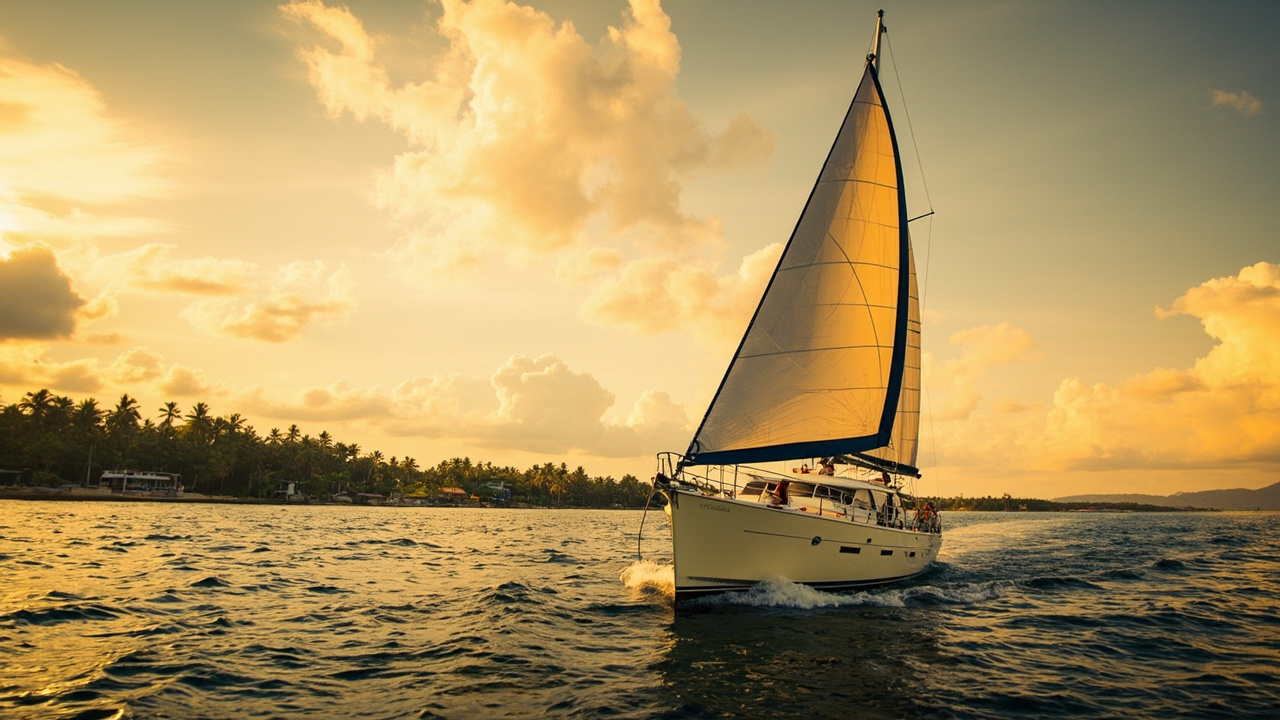
Sailing into Cambodia by yacht or private vessel in 2026? Cambodian maritime arrivals follow the same visa rules as air arrivals — every Aussie aboard needs a Tourist eVisa at $80 USD (~$122 AUD) or a Business eVisa at $90 USD (~$137 AUD), plus the maritime equivalent of the e-Arrival Card filed through the harbour master and the Cambodian Maritime Authority. Here is how Sihanoukville (KOS) entry works for skippers and crew.
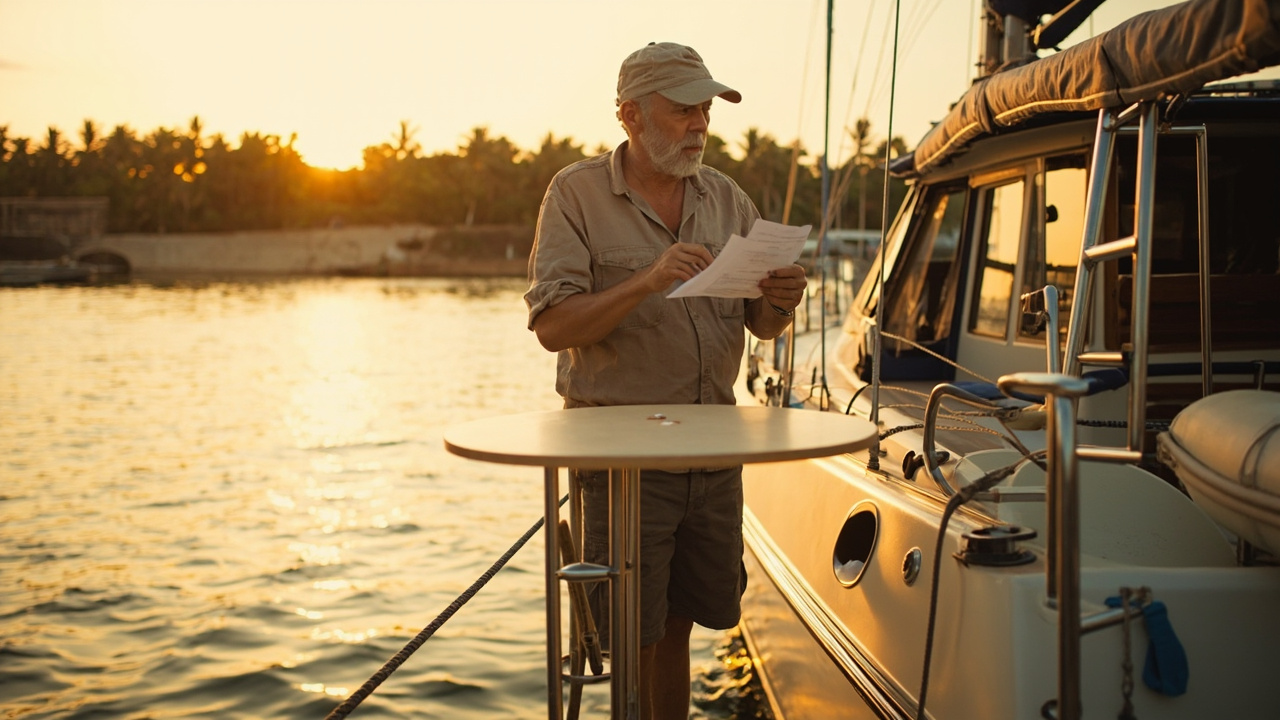
What visa do Australians need to arrive in Cambodia by yacht or private vessel in 2026?
The same visas required for air arrival. Every Aussie aboard a yacht or private vessel arriving in Cambodia in 2026 needs their own Tourist eVisa at $80 USD (~$122 AUD) all-in or Business eVisa at $90 USD (~$137 AUD) all-in, Approved in 3 business days and Delivered as a printable PDF by email. Sihanoukville (KOS) is the standard maritime entry port, and the yacht skipper handles entry-port formalities with the harbour master and the Cambodian Maritime Authority. Each crew member also needs the maritime equivalent of the e-Arrival Card — the same 14-field information set filed through the harbour master rather than online. Tourist eVisa fits a sailing holiday; Business eVisa is correct for paid charter or delivery work where meetings, paid work, sales calls, supplier visits, due-diligence, conferences, or sponsored events apply.
Wichtigste Erkenntnisse
- Cambodian maritime arrivals at Sihanoukville (KOS) follow the same visa rules as air arrivals — every Aussie aboard needs their own Tourist eVisa at $80 USD (~$122 AUD) all-in or Business eVisa at $90 USD (~$137 AUD) all-in. Approved in 3 business days and Delivered as a printable PDF by email.
- Sihanoukville is the standard Cambodian maritime entry port for private yachts and charter vessels arriving from Thailand, Vietnam, Malaysia, or Singapore. The yacht skipper handles entry-port formalities with the harbour master and the Cambodian Maritime Authority.
- The maritime equivalent of the e-Arrival Card is filed through the harbour master and the Cambodian Maritime Authority, with the same 14-field information set. Each Aussie crew member needs their own filing, not a single shared filing per vessel.
- Tourist eVisa fits the standard sailing-holiday pattern. Business eVisa is the right product if the trip involves paid charter work, delivery work for an owner, or any commercial role — meetings, paid work, sales calls, supplier visits, due-diligence, conferences, or sponsored events apply equally to maritime crews.
- Plan two weeks of lead time for the maritime entry pack: visa for every Aussie aboard, vessel documentation (registration, insurance, last port clearance), and an arrival-window notice to the harbour master 48-72 hours before the vessel reaches Cambodian waters.
Why this matters in 2026 — Aussie yachts, Sihanoukville, and the maritime visa picture
Cambodia has a small but steady stream of Australian sailors arriving by yacht each year — usually mid-cruise on a regional swing through Thailand, Vietnam, Malaysia, and Singapore, sometimes on a longer delivery between the Bay of Bengal and the South China Sea. Sihanoukville (KOS) is the standard Cambodian maritime entry port for private vessels, and it now hosts a small but functional facility for foreign-flagged yachts, with the harbour master, the Cambodian Maritime Authority, and Cambodian Immigration all operating from the port precinct. KOS is also a commercial international airport since the 2022 upgrade, so the port and the air gateway sit close together for any crew rotating in or out.
The Aussie question on the edge-cases desk is usually one of two: do maritime arrivals need a visa at all (the short answer is yes, the same as air arrivals), and how does the e-Arrival Card work for a yacht when there is no flight number to enter (the short answer is via the harbour master and the Cambodian Maritime Authority, with the same 14-field information set). The visa rules themselves are not unusual — Tourist eVisa at $80 USD (~$122 AUD) all-in for the sailing-holiday pattern, Business eVisa at $90 USD (~$137 AUD) all-in for commercial maritime work — but the entry-port workflow is. This guide walks through both.
Tourist eVisa or Business eVisa — which one fits a maritime arrival
The visa decision for an Aussie arriving by yacht is the same one as for an Aussie arriving by Qantas or Singapore Airlines: match the visa class to the purpose of the trip. The vessel does not change the visa rule. What changes is the entry-port workflow once the vessel docks at KOS.
Each Aussie aboard needs their own visa
There is no group-visa or vessel-visa product. Every Aussie crew member and every Aussie guest aboard a yacht arriving at KOS needs their own individual Tourist eVisa or Business eVisa, applied for separately in their own name. The skipper handles the entry-port paperwork; the crew handle their own visas before the vessel sails.
Häufig gestellte Fragen
Do I really need a Cambodian visa if I am sailing in by yacht?
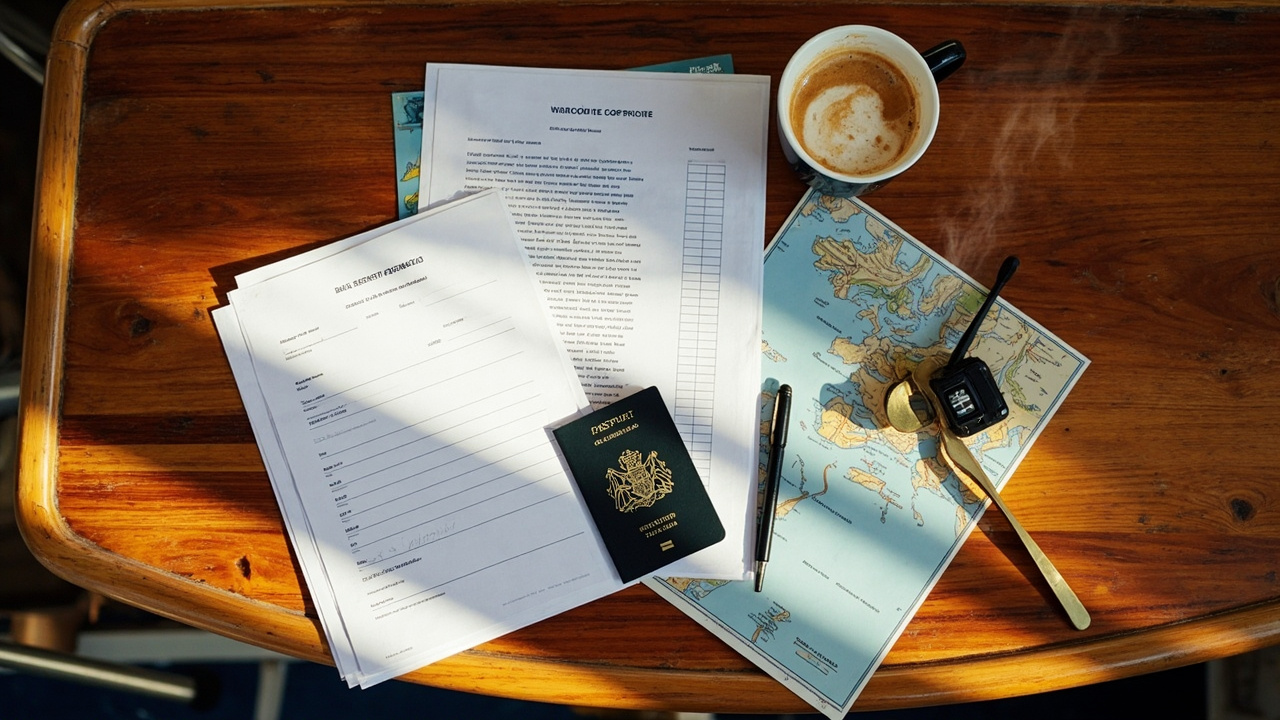
Yes. Cambodia treats maritime arrivals exactly the same as air arrivals for visa purposes. Every Aussie aboard a yacht, private vessel, or charter boat needs their own Tourist eVisa at $80 USD (~$122 AUD) all-in or Business eVisa at $90 USD (~$137 AUD) all-in, applied for in their own name before the vessel enters Cambodian waters. There is no group-visa or vessel-visa product, and there is no on-water clearance that skips the individual visa requirement.
What is the maritime equivalent of the e-Arrival Card?
The same 14-field information set as the air e-Arrival Card, with the flight fields replaced by vessel name, vessel registration, and last port of departure. Each Aussie crew member files their own card through the verified channel within the 7-day window before reaching Cambodian waters. The data flows to the same Cambodian Immigration system, and the printed reference is presented to the harbour master at KOS on arrival. $5 USD (~$7.50 AUD) verified through us, Checked end-to-end before it reaches Cambodian Immigration.
Where does an Aussie yacht enter Cambodia?
Sihanoukville (KOS) is the standard Cambodian maritime entry port for foreign-flagged yachts and private vessels. The port hosts the harbour master, the Cambodian Maritime Authority, and Cambodian Immigration in the same precinct, with a small but functional facility for private cruising vessels. KOS is also a commercial international airport, which is useful for crew rotating in or out of the vessel during the cruise.
How long does Sihanoukville maritime clearance take?
For a private yacht with three or four Aussies aboard and a clean paperwork pack, the full clearance usually takes 2-4 hours on arrival day. The harbour master and Cambodian Maritime Authority handle vessel clearance first, then Cambodian Immigration processes each crew member individually. There is no overnight delay if the arrival-window notice was filed 48-72 hours before reaching Cambodian waters and every Aussie aboard holds an Approved visa.
Do I need a Business eVisa as a paid charter skipper?
Yes. Paid charter work, paid delivery captaincy, and commercial crewing roles all sit on the Business eVisa side, regardless of vessel type. The visa class is decided by the funds flow — if you are being paid for the role, the Business eVisa at $90 USD (~$137 AUD) all-in is the right product, not the Tourist eVisa. Meetings with Cambodian marinas, supplier visits, and any commercial business while in-country also belong on the Business eVisa.
Quellen
Did this guide help you?
Aus unserem Blog

Reiseplanung
Was Sie wissen sollten, bevor Sie nach Kambodscha reisen: Eine Checkliste für amerikanische Erstbesucher
Erste Reise nach Kambodscha? Hier ist die ehrliche Checkliste für Erstbesucher aus Amerika — das Visum, die US-Dollar-Geldbesonderheit, die Sicherheitsrealität, die Impfungen, der Tempel-Kleidungsstil und wie die Ankunft am neuen Flughafen im Jahr 2026 tatsächlich aussieht.

Länderkombinationen
Thailand nach Kambodscha 2026: Warum Sie fliegen müssen (Landgrenzen geschlossen) für Amerikaner
Alle sieben Landgrenzen zwischen Thailand und Kambodscha sind seit Juni 2025 geschlossen, daher ist in 2026 der einzige Weg für Amerikaner, von Thailand nach Kambodscha zu gelangen, das Flugzeug. Hier erfahren Sie, wie die Routen Bangkok-nach-Siem Reap und Bangkok-nach-Phnom Penh funktionieren, welches Kambodscha eVisa Sie vor dem Boarding benötigen, und warum der alte Poipet-Überlandplan nicht mehr existiert.
Reiseplanung
Wie man von Phnom Penh nach Siem Reap kommt: Bus, Flug oder Fähre für Amerikaner
Drei Möglichkeiten, die 310 Kilometer zwischen der Hauptstadt Kambodschas und Angkor Wat zurückzulegen: ein $15 Expressbus, ein 45-minütiger Flug oder eine langsame Flussfähre. Hier erfahren Sie, was jede Option für einen amerikanischen Reisenden tatsächlich kostet, wie lange sie dauert und welche zu Ihrer Reise passt.