Cambodia Visa Arriving by Yacht for Australians: Sihanoukville Maritime Entry in 2026
Sailing into Cambodia by yacht or private vessel in 2026? Cambodian maritime arrivals follow the same visa rules as air arrivals — every Aussie aboard needs a Tourist eVisa at $80 USD (~$122 AUD) or a Business eVisa at $90 USD (~$137 AUD), plus the maritime equivalent of the e-Arrival Card filed through the harbour master and the Cambodian Maritime Authority. Here is how Sihanoukville (KOS) entry works for skippers and crew.
What visa do Australians need to arrive in Cambodia by yacht or private vessel in 2026?
The same visas required for air arrival. Every Aussie aboard a yacht or private vessel arriving in Cambodia in 2026 needs their own Tourist eVisa at $80 USD (~$122 AUD) all-in or Business eVisa at $90 USD (~$137 AUD) all-in, Approved in 3 business days and Delivered as a printable PDF by email. Sihanoukville (KOS) is the standard maritime entry port, and the yacht skipper handles entry-port formalities with the harbour master and the Cambodian Maritime Authority. Each crew member also needs the maritime equivalent of the e-Arrival Card — the same 14-field information set filed through the harbour master rather than online. Tourist eVisa fits a sailing holiday; Business eVisa is correct for paid charter or delivery work where meetings, paid work, sales calls, supplier visits, due-diligence, conferences, or sponsored events apply.
要点总结
- Cambodian maritime arrivals at Sihanoukville (KOS) follow the same visa rules as air arrivals — every Aussie aboard needs their own Tourist eVisa at $80 USD (~$122 AUD) all-in or Business eVisa at $90 USD (~$137 AUD) all-in. Approved in 3 business days and Delivered as a printable PDF by email.
- Sihanoukville is the standard Cambodian maritime entry port for private yachts and charter vessels arriving from Thailand, Vietnam, Malaysia, or Singapore. The yacht skipper handles entry-port formalities with the harbour master and the Cambodian Maritime Authority.
- The maritime equivalent of the e-Arrival Card is filed through the harbour master and the Cambodian Maritime Authority, with the same 14-field information set. Each Aussie crew member needs their own filing, not a single shared filing per vessel.
- Tourist eVisa fits the standard sailing-holiday pattern. Business eVisa is the right product if the trip involves paid charter work, delivery work for an owner, or any commercial role — meetings, paid work, sales calls, supplier visits, due-diligence, conferences, or sponsored events apply equally to maritime crews.
- Plan two weeks of lead time for the maritime entry pack: visa for every Aussie aboard, vessel documentation (registration, insurance, last port clearance), and an arrival-window notice to the harbour master 48-72 hours before the vessel reaches Cambodian waters.
Why this matters in 2026 — Aussie yachts, Sihanoukville, and the maritime visa picture
Read alongside the Cambodia airports and KOS Sihanoukville information for context on the wider Sihanoukville arrival picture, and the Cambodia visa edge cases guide for related unusual-route scenarios that Aussie travellers run into. The official Cambodia eVisa for Australians hub covers cost, documents, and processing time in one canonical write-up.
Tourist eVisa or Business eVisa — which one fits a maritime arrival
Most Aussie maritime arrivals at KOS are owner-skippered sailing holidays — a private yacht, a few mates aboard, a multi-week regional cruise. That is the standard Tourist eVisa pattern, and every aboard applies for their own visa before the vessel enters Cambodian waters. Paid charter work, delivery captaincy, and commercial crewing all sit on the Business eVisa side. The Business eVisa versus Tourist cost-difference guide walks through the practical differences in more detail.
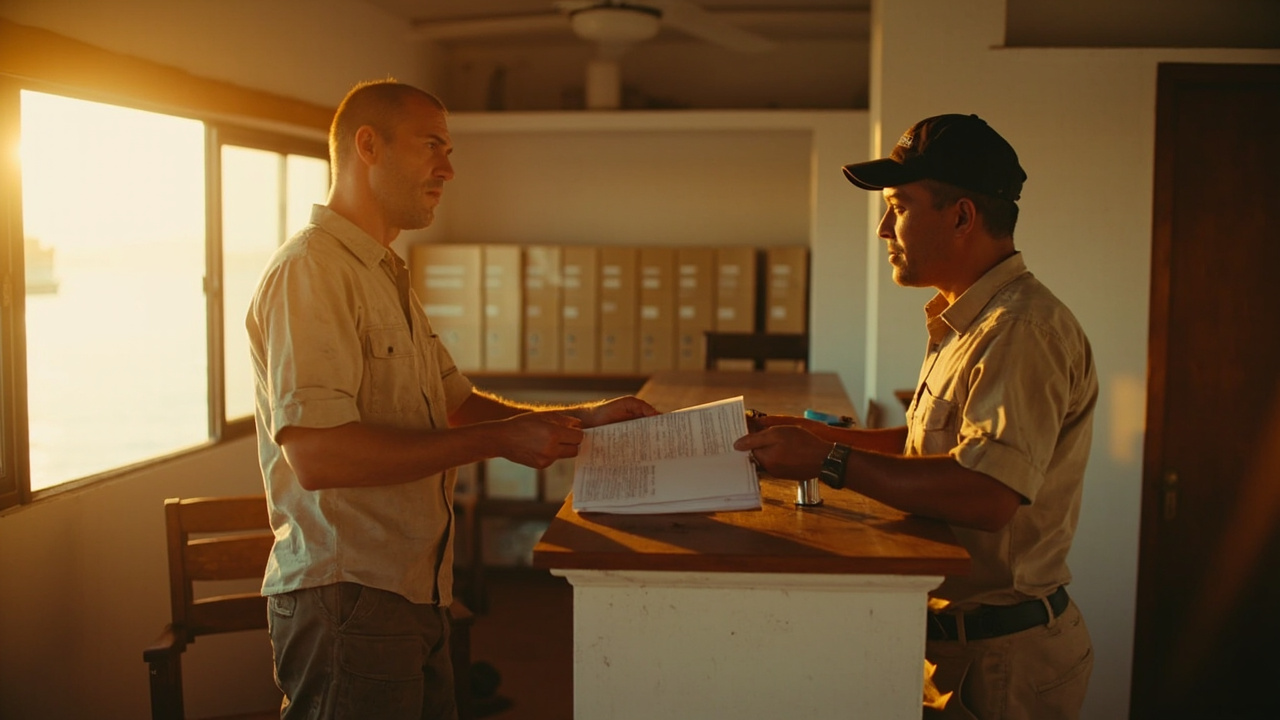
Entry-port formalities at Sihanoukville — what the skipper actually does
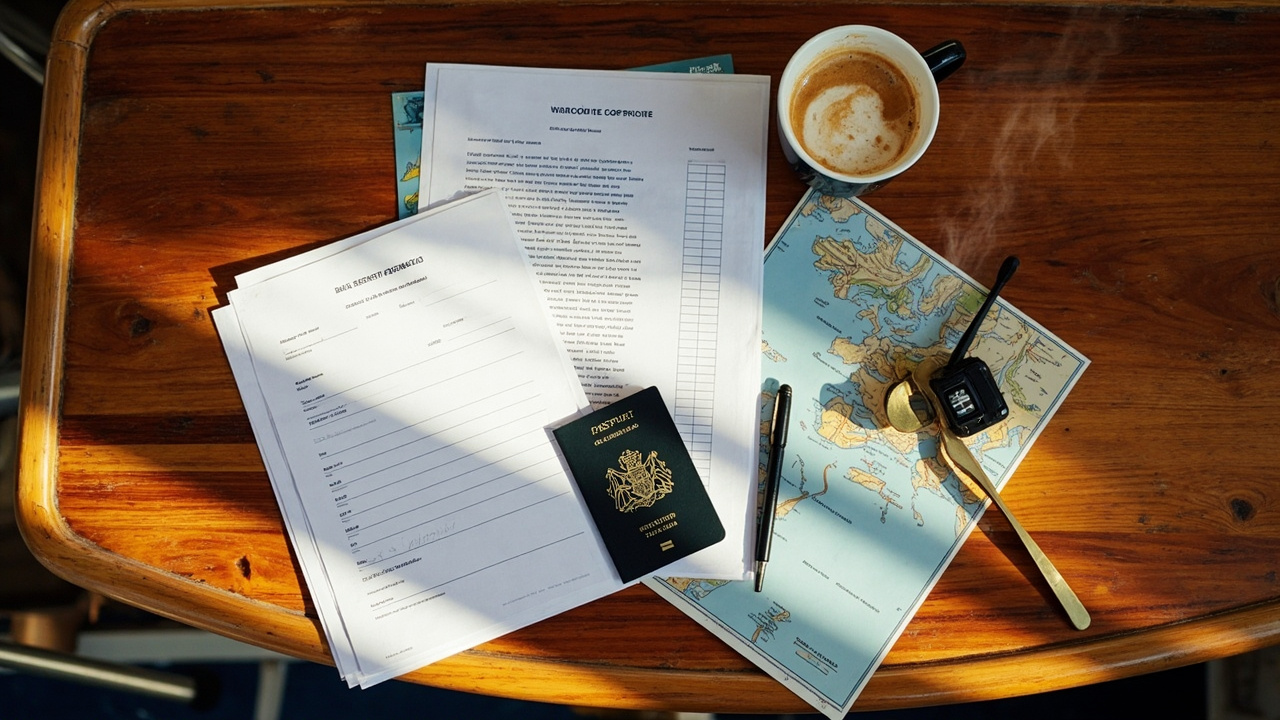
Cambodian Immigration then processes each crew member individually — passport, visa PDF, and the maritime arrival-card paperwork. Stamped in, the 30-day single-entry clock starts from the entry date. From this point each crew member can move freely in Cambodia under the visa they hold. The Cambodia visa documents required for Australians guide covers the document pack that each crew member should be carrying.
常见问题解答
Do I really need a Cambodian visa if I am sailing in by yacht?
Yes. Cambodia treats maritime arrivals exactly the same as air arrivals for visa purposes. Every Aussie aboard a yacht, private vessel, or charter boat needs their own Tourist eVisa at $80 USD (~$122 AUD) all-in or Business eVisa at $90 USD (~$137 AUD) all-in, applied for in their own name before the vessel enters Cambodian waters. There is no group-visa or vessel-visa product, and there is no on-water clearance that skips the individual visa requirement.
What is the maritime equivalent of the e-Arrival Card?
The same 14-field information set as the air e-Arrival Card, with the flight fields replaced by vessel name, vessel registration, and last port of departure. Each Aussie crew member files their own card through the verified channel within the 7-day window before reaching Cambodian waters. The data flows to the same Cambodian Immigration system, and the printed reference is presented to the harbour master at KOS on arrival. $5 USD (~$7.50 AUD) verified through us, Checked end-to-end before it reaches Cambodian Immigration.
Where does an Aussie yacht enter Cambodia?
Sihanoukville (KOS) is the standard Cambodian maritime entry port for foreign-flagged yachts and private vessels. The port hosts the harbour master, the Cambodian Maritime Authority, and Cambodian Immigration in the same precinct, with a small but functional facility for private cruising vessels. KOS is also a commercial international airport, which is useful for crew rotating in or out of the vessel during the cruise.
How long does Sihanoukville maritime clearance take?
For a private yacht with three or four Aussies aboard and a clean paperwork pack, the full clearance usually takes 2-4 hours on arrival day. The harbour master and Cambodian Maritime Authority handle vessel clearance first, then Cambodian Immigration processes each crew member individually. There is no overnight delay if the arrival-window notice was filed 48-72 hours before reaching Cambodian waters and every Aussie aboard holds an Approved visa.
Do I need a Business eVisa as a paid charter skipper?
Yes. Paid charter work, paid delivery captaincy, and commercial crewing roles all sit on the Business eVisa side, regardless of vessel type. The visa class is decided by the funds flow — if you are being paid for the role, the Business eVisa at $90 USD (~$137 AUD) all-in is the right product, not the Tourist eVisa. Meetings with Cambodian marinas, supplier visits, and any commercial business while in-country also belong on the Business eVisa.
来源
Did this guide help you?
来自我们的博客

Trip Planning
美国首次赴柬埔寨旅客须知清单
首次赴柬埔寨旅行?以下是面向美国人的诚实首次旅客清单——签证、美元货币特点、安全现状、疫苗接种、寺庙着装规范,以及2026年新机场的实际抵达体验。

国家组合
2026年从泰国前往柬埔寨:美国人为何必须乘坐飞机(陆地边境已关闭)
自2025年6月以来,泰国与柬埔寨之间的全部七个陆地边境已关闭,因此在2026年,美国人从泰国进入柬埔寨的唯一方式是乘坐飞机。以下是曼谷至暹粒和曼谷至金边航线的工作方式、登机前所需的柬埔寨电子签证,以及为何旧的波贝陆路计划已不再可行。
Trip Planning
美国人如何从金边到暹粒:巴士、航班或渡轮
三种方式跨越柬埔寨首都与吴哥窟之间的195英里:15美元的特快巴士、45分钟的航班或缓慢的河流渡轮。以下是每种方式对美国旅行者的实际费用、所需时间以及哪种适合您的行程。